What a payment means
A payment is the transfer of money or value from one party to another. The person or business giving the funds is the payer. The person or business receiving them is the payee. In everyday life, paying a shop for groceries is a simple example.
Payment can also settle a debt or meet an obligation. A customer might pay a bill, a firm might pay a supplier, or one person might repay a loan. The value can move as cash, a bank balance, or another agreed form of value.
A payment is not the same as a promise to pay. A card purchase may be approved at checkout, while the funds move between banks later. This difference matters when tracking balances, refunds, and the time it takes for money to arrive.
- Payer: the party that sends or gives value.
- Payee: the party that receives value.
- Payment method: the way the value moves, such as cash or card.
Those roles can switch. A shop pays its staff, then receives payment from its customers. Context tells you who is paying whom.

Common payment types
People and businesses can pay in several ways. The best choice often depends on speed, cost, safety, and whether the recipient accepts it. Some methods move value directly, while others use banks or payment firms to process the request.
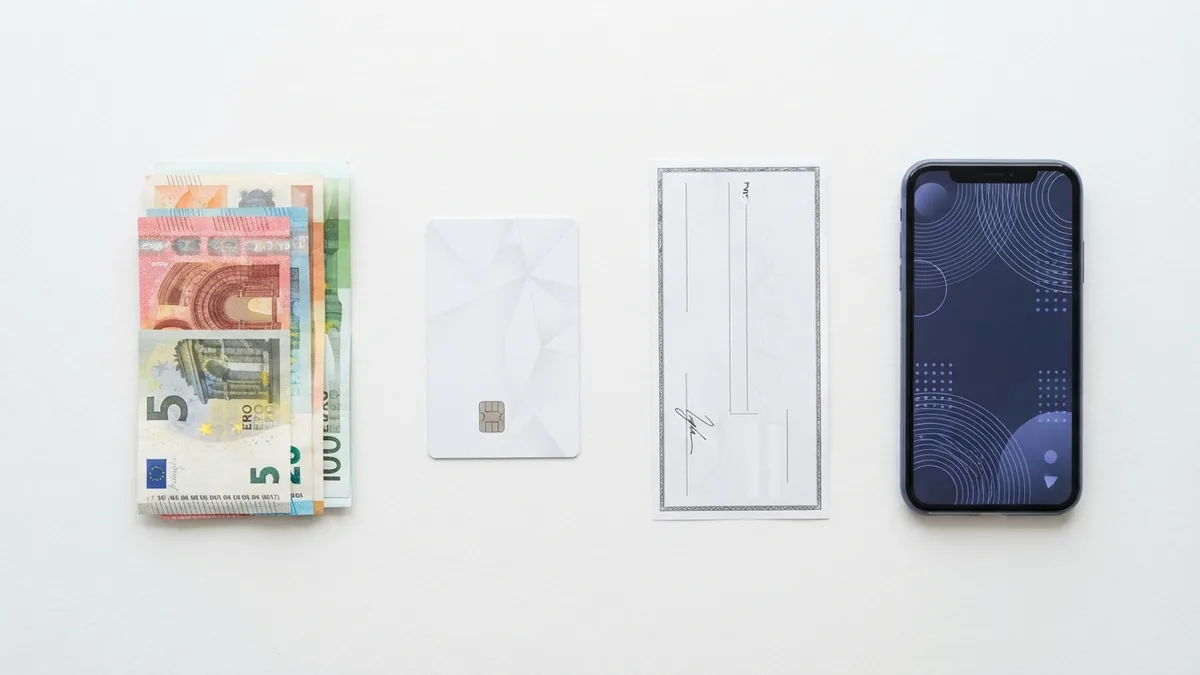
Cash is handed from payer to payee. A check gives the payee an instruction to collect funds from the payer’s bank account. Card payments use credit or debit card details. Credit draws on a line of credit, while debit usually draws on funds in a linked account.
Digital wallets store payment details or value on a phone or other device. They can support in-person purchases and online checkout. A wallet may use a linked card or bank account, so the wallet is often the access point rather than the source of funds.
| Method | How it works | Common use |
|---|---|---|
| Cash | Funds pass directly between people | Small in-person purchases |
| Check | A bank is asked to pay from an account | Rent or business bills |
| Credit or debit card | A card network routes a purchase for approval | Stores and online orders |
| Digital wallet | A device sends a stored payment method | Phone-based checkout |
Fees vary by method and by the parties involved. Card sellers may pay processing fees, and some services charge users for certain transfers. Check the terms before sending money, especially for urgent or cross-border payments.
How payments work in banking
In banking, a payment is usually an instruction to move funds between accounts. A bank checks the instruction, applies account rules, and sends the request through the right payment network. The recipient’s bank then makes the funds available under its own timing rules.
ACH payments in the United States move funds between bank accounts through an electronic network. They are common for payroll, bill payments, and recurring transfers. The Federal Reserve’s ACH service overview describes the network’s role in processing these payments.
A wire transfer is another bank payment. It is often used for large or time-sensitive transfers, though timing and fees depend on the banks and route. Mobile banking lets customers start some transfers through an app. The app is a channel; the bank or payment network still moves the funds.
To define payment in banking with example, consider a monthly utility bill. The customer instructs their bank to send $120 to the utility company. The customer is the payer, the utility is the payee, and the bank sends the payment through an available transfer method.
Payments can be domestic or cross-border. A transfer across currencies may include an exchange rate and a conversion fee. Before sending, confirm the recipient details, total cost, arrival time, and any limits.

Examples of everyday payment transactions
Examples make the roles and steps easier to see. At a cafe, a customer taps a debit card for a $6 drink. The cafe receives the sale through its card provider, while the customer’s bank later posts the charge to the account.
For payroll, an employer sends wages to staff bank accounts. The employer is the payer, and each worker is a payee. The bank transfer may be set up to repeat each pay period, which reduces manual work.
A person may also send $40 to a friend through a banking app. The sender enters the recipient and amount, checks the details, and confirms the transfer. If the recipient’s details are wrong, getting the money back may take time.
These cases differ in method, but each has the same core parts: a payer, a payee, an amount, and a way to move value. The payment record can also show a date, reference, and status. Keep the record when a purchase or transfer may need follow-up.
- Buying lunch with cash: the handoff completes the payment at once.
- Paying rent by bank transfer: the instruction moves funds from tenant to landlord.
- Ordering online by card: approval may come before the final account posting.
New ways to pay and what to check
Many payments now begin on phones or websites. Digital wallets, bank apps, and online checkout tools make it easier to pay without cash. Contactless cards and phone taps also speed up checkout for small in-person purchases.
Convenience does not remove the need to check details. Review the amount and recipient before confirming a transfer. For a card purchase, save the receipt or order record. For a recurring payment, note when it will renew and how to stop it.
Compare the full cost, not just the payment screen. A merchant may pay a fee for card acceptance, while a customer may face a fee for a wire or currency conversion. The fee depends on the provider, payment type, and country.
When a payment is delayed, first check its status and the account details. Then contact the bank or service that handled the transfer. For card disputes, contact the card issuer and keep proof of the purchase or return.
Rules and legal points to know
Payment rules depend on the country, payment type, and deal between the parties. Laws may shape how checks, electronic transfers, card disputes, refunds, or cash payments work. A rule in one place may not apply elsewhere.
There is no single global minimum amount for cash payments. Some places set limits on cash use or require extra records for certain payments. In the United States, businesses may set their own policies on accepting cash, as the Federal Reserve’s legal tender FAQ explains.
Fees also depend on local law and the terms of the service. Card fees may be charged to sellers, and rules about passing costs to buyers can vary by location. Read the posted terms before paying, especially for large sums or a cross-border transfer.
For a disputed payment, keep receipts, messages, and account records. Contact the bank or payment provider quickly, since notice periods can apply. For a large or complex payment, seek advice from a qualified local professional.
- payment methods explained
- bank payment types
- digital payment methods
- bank transfer payments
- credit card processing fees